
Tag: slow

ARGAN OIL NATURAL BIO OIL Properties – Virtues and Benefits

ARGAN OIL NATURAL BIO OIL Properties – Virtues and Benefits

ARGAN OIL NATURAL

ARGAN OIL Natural… How argan oil fight Psoriasis-Baldness-Osteoarthritis-Rheumatism-burns-the heavy legs and other health problems?

ARGAN OIL natural treasure of vitality and health

Argan oil is a medicinal oil known since antiquity for its dermatological properties (care for skin conditions and hair).

100% organic argan oil for all fans of Alternative Medicine.

It is used pure or enriched with the possible addition of essential oils for massage revitalizing health, preventive and curative.

This oil is naturally rich in vitamin E and Omega-3 can be classified in the family of nutraceuticals.

This is a real concentrate of nature, sun and vitality.

In traditional medicine, argan oil deals mainly with:

– PSORIASIS
– OSTEOARTHRITIS
– ALOPECIA
– Stretch marks
– Brown Spots
– HEAVY LEGS
– Burn (heat or sunlight)

Argan Oil in the fight against psoriasis:
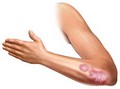
 ARGAN OIL NATURALPsoriasis for up to 3% of the population. This is a skin condition usually locatedon the elbows, knees with frequent damage to the scalp.
Particularly unsightly, it results in the production of red patches covered withscales abundant, clean, dry and brittle.

Traditionally argan oil is used by the Berber tribes of southern Morocco to treat psoriasis.
The effects are remarkable and it is likely that this is due to the high vitamin E content of argan oil.

Learn more about Argan Oil in the fight against psoriasis


Argan Oil to heal and relieve rheumatism, arthritis and joint pain
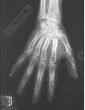
 ARGAN OIL NATURALOsteoarthritis is a degenerative rheumatic disease that occurs most often after age 50.

It affects the cartilage bones of the joint.

For reasons not yet fully understood the cartilage breaks down and forms of « sticking points » in contact with bone pain of the joint.

Care for osteoarthritis physiotherapy proven, especially if the massages are done with the argan oil to regenerative virtues recognized.

Learn more about the argan oil to heal and relieve rheumatism, arthritis and joint pain


Argan Oil in the fight against Hair Loss and Baldness

 ARGAN OIL NATURAL

Hair loss affects both men and women. Its scientific name is alopecia.

From 20 years but most often after age 35, men can go up to a total baldness, though some women may also suffer from alopecia, especially after childbirth ormenopause.

Thanks to the strong regenerative power of its essential component, vitamin E,argan oil can treat problems of hair, both for the man to the woman.

Learn more about Argan Oil in the fight against psoriasis


The cosmetic properties:

Argan oil is rich in natural ingredients and active ingredients, omega 6, vitamin E, antioxidant, they play an important role in cell renewal. Argan oil is also saidargan argan oil reduces wrinkles and nourishes dry skin, it penetrates quicklythus avoiding to have a fat deposit, it is a dry oil. Argan oil promotes healing oftraces left by acne, chicken pox, pimples and other skin irritations or attackssuch as stretch marks, cracks and burns.

The benefits of argan oil for hair:

Used for hair care, argan oil in favor of strengthening and shine the hair dry, dulland fragile. All this naturally.

How to use argan oil on the hair?

To give strength and vitality to fragile hair, apply argan oil an hour beforeshampoo all over the hair, then wash and rinse .. Warning: Do not overdo it on the scalp or you’ll spend the bottle of shampoo!

Council for fragile hair:

To protect your hair from the drying effects of sun, sea salt, or chlorine, use arganoil by touching the hair styling.


Argan oil to combat stretch marks

 ARGAN OIL NATURALStretch marks are skin breaks. Essentially, it is women who are victims.

In particular, during the great changes that are physical puberty and pregnancy orslimming diets that follow one another.

Learn more about Argan Oil to combat stretch marks

Argan oil to combat dark spots

Brown spots on the face, neck, backs of hands and forearms are the result ofexposure to UV sunlight. These brown spots, also known as age spots,increases with age. However, they may appear in some subjects at 25 years.

Learn more about Argan Oil to combat dark spots

Argan oil to relieve tired legs
 ARGAN OIL NATURAL


Prepare massage oil as well as before against rheumatism. Make touches on your legs with the palm and with your fingertips and let your hand glide over the entire leg.


Argan oil to allow for faster healing, soothe burns

Use your pure argan oil. The night before bed, apply directly to wounds, irritated areas or burns. That all your acts argan oil at night.

Argan Oil to restore circulation and return to fitness and vitality



Add to argan oil a few drops of essential oils of cinnamon, lemon and thyme.

Knead and mix your members (especially the legs) to penetrate deep into the dermis to allow better blood circulation, restore tone to your body and return tofitness and vitality.

Take your muscles regularly twist, firmly, slowly and then faster. This eliminatesmuscle tension, toxins and body fatigue states.
Finish by tapping to fully activate your blood circulation.

SLEEP WELL History and Sociology of the SLEEP make your night a DEEP SLEEP

SLEEP WELL History and Sociology of the SLEEP make your night a DEEP SLEEP

SLEEP WELL History and sociology of the sleep

SLEEP WELL History and Sociology of the SLEEP make your night a DEEP SLEEP I have two gods, you and sleep, the two of you mean everything to me.
Goethe to Charlotte van Stein

SLEEP WELL

SLEEP WELL


1. « Four out of ten Belgians sleep badly« 

Source: Het Nieuwsblad 5-10-2004
Why do we actually still sleep? Of all primates, the human being already sleeps least. Did, a century ago, Thomas Edison not contend that with the invention of electricity and artificial light, sleeping in fact becomes unnecessary? Indeed, having to go to sleep because it is too dark to go out hunting safely or to gather food, today for most people belongs to the past.

In fact, artificial light makes it possible to have factories work day and night in 3 shifts, to have shops open 24 hours a day, to have a dazzling nightlife and even to do all kinds of interesting things at home at night and not to have to sleep. Indeed, why do we actually still sleep?

Why do we “lose” 1/3 of our lives to something that is like “being death”?
Do we really enjoy that so much?

Chronic short-sleepers Napoleon Bonaparte was on the alert day and night, and thus suffered from a chronic sleep deficiency. He only slept short sleeps, never exceeding a few hours. Thomas Edison invented artificial light and thought sleeping was “a deplorable regression to the primitive conduct of cavemen.” Albert Einstein was a frequent sleeper, both during the night and by day, he regularly doze off. He pretended that it contributed to his creativity.

2. Evolution history

SLEEP WELLNevertheless, there is something that forces us to sleep. Is it the tiredness of our muscles and mind that creates the need for sleep? Or do our genes in a circadian 24 hours rhythm order us to go to sleep right now? Science has no straightforward answer yet.

As Homo Sapiens we have had a long evolution history. Today we still have the body of the hunter-gatherer, including the coccyx. From a long time before the first Homo Habilis until recently, the human being was extremely vulnerable when it grew dark.
He lived solitarily or in group, but had to remain observant at all times. When he slept, he hided and protected himself as much as possible in caves or on higher places where the entrance or entry could be watched over. As our ancestors were occupied with keeping up a fire, watching and other survival activities, they subconsciously felt it was not permitted to sleep through for several hours a day. Their nights were interrupted several times by active moments. Today, primitive population groups still sleep several successive short sleeps at night. By organizing themselves into groups and hierarchies, the night watch could be reduced to a restricted group and the others could slowly evolve into the modern social sleep, in which the shorter sleeps are linked up and people sleep through, preferably without waking up in between.

We fall asleep under the influence of vapours that ascend from our stomach.
Aristotle, Greek philosopher

3. Sleeping habits

SLEEP WELL

SLEEP WELL

In the Western world, we indeed mostly sleep a sleep that consists of 5 stages that are in turn divided in different phases. When studying sleep behavior outside the European continent and during many study tours, I found that many population groups still have quite different sleeping habits.

The distinctive feature of their sleep behavior is that population groups that still live very close to nature, do not sleep “through” the night, but actively interrupt their sleep. It was also found that the climate is as important as darkness when it comes to explaining the widespread “afternoon nap”. Even in China, most factories and offices are closed down at noon. In Japan, it is still very popular to have a nap behind your desk at noon. At 5 o’clock in the morning, Bombay already shimmers with activity and the inhabitants of Abidjan only get the hang of things at 11 o’clock in the evening.


4. Where you sleep

Not everyone sleeps out his sleeping needs in the same way; frequent shorter sleeps on the ground, a couch, a seat or a bed spread over the entire day are more common than our modern social sleep in a neatly made-up bed from 11 o’clock in the evening till 7 o’clock in the morning. In the Western world, we evolved from sleepers in a nest or cave to more protected rooms or turret rooms, where people and families sat around a fire and looked for the warmth and protection of one another. They slept on beds that protected them against moisture, cold and vermin. These beds mainly consisted of skins, bags filled with all kinds of elastic materials and blankets that were even spread out over the chest with the most precious belongings.
The Greeks and Romans lived and ate on their beds. In the Middle Ages, the most combative slept sitting in full battle regalia to be able to swing into action while naked men, women and children cozily dived in a bed under the skins. Victorian prudery and new ideas on hygiene brought nightclothes, nightcaps, individual bedrooms and beds. French kings received their subjects while half-sitting/half-lying in their beds.

5. How you sleep

Today, 70% of the people still sleep together with someone else and some hundred years ago the Western world adopted the habit of sleeping in individual bedrooms where parents and children can retire.

Since the invention of the metal spring mattress and the bed box, we sleep completely horizontally and the hassock-pillows have gradually made way for modern more or less hygienically sound beds.

6. Women sleep on their sides, men sleep on their fronts or sides

SLEEP WELL

SLEEP WELL

A survey conducted in 1996 amongst 2,000 of my customers showed that 78% of the women are slide sleepers, while 72% of the men are side/belly sleepers. That’s only logical as in earlier days, most women were constantly pregnant and therefore had not many options left. In addition, by lying on their sides, women were able to better protect the fetus.

In fact, men are better protected by their backs and they can get up much more rapidly from the side/belly position. Other studies reveal that 15% sleep on their backs, 24% on their left sides, 47% on their right sides and 14% on their bellies.

But when we lie down, we often lie on our backs. This change is not only caused by mattresses that are much too hard and thus disturb our sleep profile, but also results from the introduction of electrically sit adjustable bed bases that brought King Television even into the bedroom. We now have light, digitalized communication, a worldwide information network… at our disposal 24 hours a day. And at night too, we permanently have access to all kinds of amusement and recreation… even in our bedroom.

The king sleeps on his back, the sage on his side and the rich man on his belly.
7. Sleep debt

We work and travel at night and yet feel that we so build up some kind of sleep debt. Perhaps we indeed can function 24 hours a day without losing much time to sleeping. When comparing the technological changes over the last century to our overall evolution, they took place in a symbolic second, while our body took 30,000 years to evolve from the homo sapiens into modern man.

Since the light bulb was invented in 1936, we technically can handle night work, our lives can become more and more hectic and we can even gather information or find entertainment in the middle of the night.

Number of hours of sleep per 24 hours
Donkey 3
Horse 3
Cow 4
Dolphin 7
Pig 8
Dog 9
Chimpanzee 10
Gorilla 12
Cat 15
Bat 20


8. The great lack of sleep

But, how flexible is our sleep need? Do we really just waste one third of our lives? The more I learn about sleeping, the more I realize that the problems we face today are rather due to a sleep deficiency than to a waste of time through sleeping. For one thing bad-sleeping is the worst ailment of our times, and for another thing modern, technological society and higher life expectancy just require that we, even more than in the past, optimally utilize our sleep.

In sleep labs all over the world, sleep debt was created under lab conditions and the behavior of test subjects was studied.Each study shows that even the slightest sleep deficiency has us function less efficiently. For that matter, short naps in the daytime resulting from this sleep deficiency actually are the biggest cause of accidents, both at work and on the road.

So, what is it that makes sleep so important? That is what you should know!

GREEN SLEEP